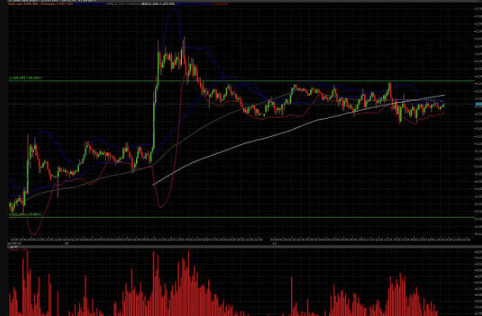
Exchanges shape price discovery by aggregating diverse orders and displaying market depth, enabling timely execution. Trade latency tightens feedback loops between order placement and fill, sharpening the price signal. Tick sizes, liquidity incentives, and venue competition influence spreads and participation costs, affecting price accuracy. Information flow and transparency reduce asymmetry, while fragmentation and maker activity mold reference prices and volatility. These mechanisms collectively drive convergent, orderly price formation, yet their interplay leaves open questions about optimal structure and resilience.
How Exchanges Shape Price Formation
Exchanges play a pivotal role in price formation by aggregating diverse buy and sell orders and enabling transparent, timely execution. Market depth reveals supply and demand layers, shaping educated expectations about near-term moves. Trade latency, minimized through technology, tightens feedback between order placement and execution, enhancing price accuracy. This empirical interface supports disciplined evaluation of market structure and price discovery dynamics.
Tick Sizes, Liquidity, and the Costs of Price Discovery
The analysis centers on tick size dynamics and their effect on order submission, spread compression, and competition among venues.
Liquidity incentives alter participation costs and marginal improvement in price accuracy.
Empirical evidence shows nuanced tradeoffs between immediacy, depth, and informational efficiency.
Information Flow, Transparency, and Price Signals
Information flow and transparency shape how price signals are formed and interpreted across trading venues.
The analysis centers on how information dissemination reduces informational asymmetry and aligns incentives, enabling participants to react to consolidated signals rather than isolated fragments.
Empirical evidence suggests that timely disclosures improve convergence of prices; regulatory alignment reinforces consistent interpretation, supporting orderly discovery while guarding against selective, venue-specific advantages.
See also: How Intelligent Systems Improve Resource Management
Market Structure Choices, Makers, and Price Volatility
Market structure choices shape how liquidity is allocated, how makers participate, and how volatility emerges across trading venues. The analysis emphasizes liquidity fragmentation and the role of makers in price formation, highlighting how fragmented venues alter order flow, depth, and execution risk. Tick size dynamics influence quote spacing, inventory management, and strategic behavior, shaping cross-venue volatility and reliability of reference prices.
Conclusion
Exchanges mold price discovery through rapid execution, disciplined liquidity provision, and transparent order books, aligning trades with underlying value. Empirical patterns show that tick sizes, fees, and venue fragmentation calibrate participation costs and spreads, while maker activity and information flow sharpen price signals. The resulting convergence toward fair value hinges on competitive forces and policy-driven transparency. In sum, market structure choices set the tempo of price formation, and the rhythm matters for accuracy, resilience, and efficiency.
