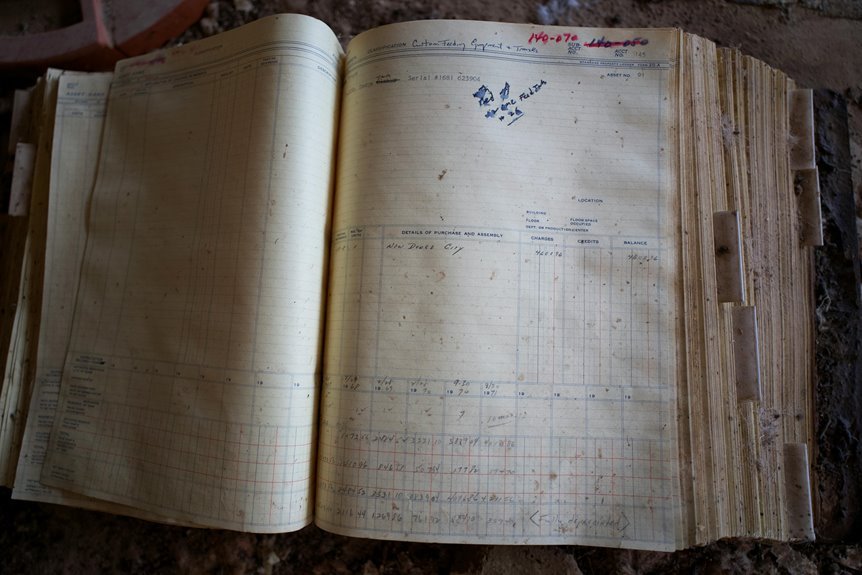
The CrystalFusion Observation Ledger consolidates multiple entry identifiers into a unified record of crystallization phenomena. Each card presents measured growth metrics, spectral data, and contextual notes with standardized terminology. The compilation emphasizes reproducible procedures and traceable environment-structure linkages. Patterns and deviations emerge from cross-entry comparisons, suggesting consistent pathways as well as situational variability. The framework invites scrutiny of how measurement protocols influence interpretation, leaving key questions unresolved and poised for further, disciplined examination.
What Is the Crystalfusion Observation Ledger?
The Crystalfusion Observation Ledger is a structured record-keeping tool designed to document systematic observations of Crystalfusion phenomena. It compiles organization-wide field notes, specifying contexts, methods, and results. Entries document growth patterns with objectivity, enabling cross-referencing and replication. The ledger emphasizes verifiable data, consistent terminology, and traceability, supporting disciplined analysis while preserving an accessible framework for researchers who value freedom and inquiry.
How the Entries Illuminate Crystal Growth Patterns
Entries demonstrate how recorded observations manifest in crystal growth patterns, revealing consistent pathways and deviations across contexts. TheEntries support analytical assessment of crystal growth, highlighting recurring motifs and rare anomalies. Data interpretation links morphology to environment effects, while structure dynamics explain evolving facets. Documented variations underscore controlled versus stochastic growth, enabling rigorous cross-context comparisons and a disciplined, freedom-responsive appraisal of underlying mechanisms.
Reading the Data: Measurements, Spectra, and Field Notes
Measuring and interpreting the collected data—encompassing measurements, spectra, and field notes—requires a rigorous, stepwise approach to ensure objectivity and reproducibility. The analysis emphasizes Measurements Context, Crystal Morphology, and Spectral Patterns, while acknowledging Environmental Interplay. Field Notes document procedural nuance, enabling cross-entry comparisons. Clarity sustains Crystal Growth narratives without bias, fostering a disciplined, freedom-oriented evidentiary framework.
Interpreting Environment-Structure Interplay Across the Entries
How do environmental variables shape the observed crystal structures across the ledger, and what consistent patterns emerge when these factors are controlled? The analysis traces crystal dynamics amid controlled conditions, aligning spectral trends with documented field notes. Across entries, growth mechanisms reveal reproducible morphologies, while deviations pinpoint microenvironmental influences. The interpretation remains evidence-based, precise, and free from extraneous narrative, enhancing cross-entry comparability.
Frequently Asked Questions
How Are Entry IDS Assigned to Each Observation?
Entry ids are assigned via a deterministic mechanism that records timestamped events and sequence counters, ensuring uniqueness. Calibration traceability is maintained through cross-referenced logs, enabling auditability while entry id assignment mechanisms support reproducible data integrity and operational transparency.
What Calibration Standards Back the Measurement Scales?
What calibration standards back the measurement scales? Calibration standards underpin measurement scales with traceable references, documented procedures, and regular verification; evidence-based practices ensure accuracy, consistency, and freedom from bias in every observational assessment and data fusion.
Do Entries Include Anomaly Flags or Uncertainty Notes?
Entries include anomaly flags and uncertainty notes; both are documented alongside measurements. The ledger marks deviations explicitly and quantifies confidence, enabling independent verification while preserving transparency and interpretive freedom for analysts assessing measurement reliability and methodological rigor.
Are There Correlations With External Environmental Events?
There is a modest correlation with external environmental events. In a hypothetical case, a spike coincides with solar activity, suggesting a correlation methodology that quantifies external drivers and supports cautious inference; evidence remains evolving and context-dependent for external drivers.
Can the Ledger Be Cross-Referenced With Related Datasets?
Cross referencing datasets is feasible; the ledger’s structure supports data lineage analysis, enabling traceability across sources. Analytical integration reveals provenance, uncertainties, and consistency checks, informing a transparent, evidence-based synthesis for researchers pursuing freedom through rigorous validation.
Conclusion
In the ledger’s glass sea, each entry stands as a careful pebble dropped into still water, rippling with measurements and notes. The crystals, like patient reefs, reveal growth patterns under changing currents of environment and technique. Across entries, correlations emerge: morphology mirrors field variables, spectra track subtle shifts, and procedural nuances explain deviations. The allegory confirms a disciplined map—environment and structure entwined—whose verifiable data guide reproducible inquiry, rendering crystalline truths visible yet bounded within documented conditions.
